
Circular plastics have stagnated since 2022, with Plastics Europe reporting that they accounted for 15.4 per cent of European plastics production in 2024, only slightly above the 14.8 per cent reported in 2023. Meanwhile, the EU Packaging and Packaging Waste Regulation aims to make all packaging recyclable in an economically viable way by 2030 and to increase the use of recycled plastics. Here, Nigel Smith, CEO of TM Robotics, Shibaura Machine’s official distribution partner for injection moulding machines and automation systems in the UK and Ireland, explains why processors must select moulding systems to handle a broader material mix.
As Plastics Europe’s figures suggest, the challenge is not only increasing the share of circular plastics, but also making those materials workable in production. For processors, material choice was once fixed for the lifetime of a product. That is no longer the case. A component originally designed for virgin resin may later need to use recycled plastic, include more regrind from production waste or be redesigned using a more flexible material such as an elastomer, silicone or specialist polymer.
That wider material mix creates a processing challenge: a process developed around one resin may not perform identically when the feedstock changes. Differences in melt flow, temperature sensitivity, mould filling and cooling or curing behaviour can all affect the result.
This is where one-size-fits-all moulding reaches its limit. Tonnage and footprint remain important, but material behaviour, part geometry, filling requirements and cycle expectations should shape the production strategy.
Variation behind the specification
Recycled thermoplastics illustrate the challenge clearly. Even when a grade meets a defined specification, processors may encounter greater variation in moisture, melt behaviour or contamination than with a tightly controlled virgin material stream.
Changes in viscosity or moisture can influence filling pressure, surface quality and mechanical performance. Processors therefore need repeatable injection control, consistent plasticisation and suitable drying, cooling and monitoring. They must also distinguish genuine material variation from temperature drift, tooling wear or a maintenance problem.
Different materials, different processes
Elastomers bring another set of requirements. Their flow behaviour, temperature sensitivity and recovery characteristics can differ significantly from conventional thermoplastics.
Rubber and silicone extend the distinction further. Unlike thermoplastics, these materials may need time in the mould to cure or cross-link, while the production cell must also allow for specialist tooling, insert loading and reliable demoulding. Vertical machine configurations can help here because they give operators and automation systems clearer access to the mould area, particularly where inserts must be positioned before injection or parts need to be removed without distortion.
Look beyond the press
The wider production cell must support the same processing strategy, from drying and feeding to part removal, inspection and finishing.
A press may produce a stable cycle while an unsuitable auxiliary process introduces variation before or after moulding. In recycled plastics applications, inconsistent drying or material delivery can undermine precise injection control. In rubber or silicone processing, curing and demoulding may determine the cycle more than injection speed.
Processors should therefore define the complete sequence before selecting equipment. Automation should support those requirements by maintaining consistency and reducing unnecessary intervention.
Matching technology to the application
Shibaura Machine’s portfolio illustrates how different architectures can be matched to these demands.
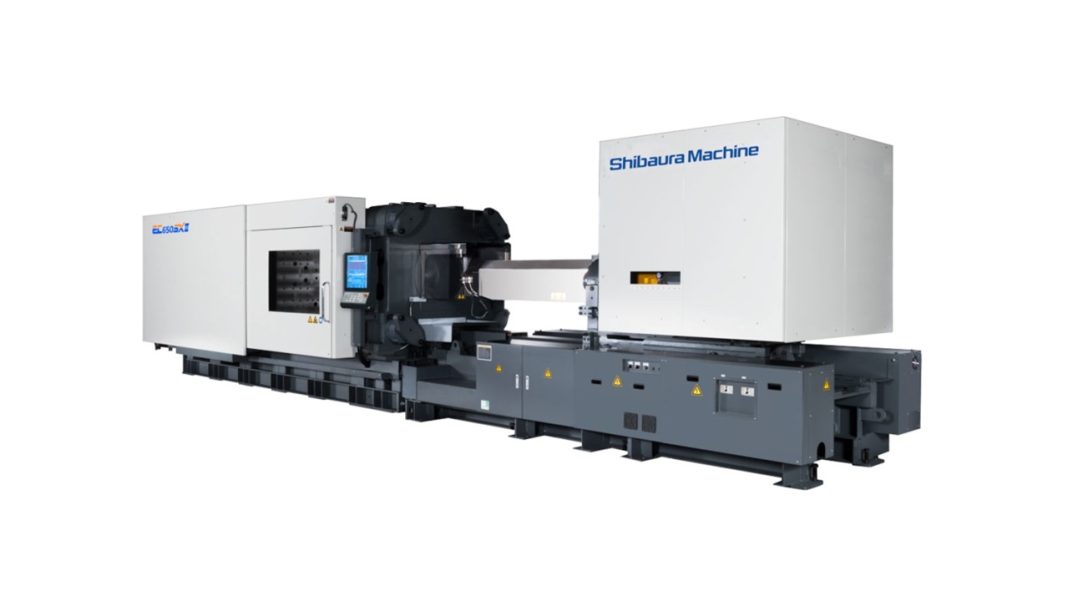
Its EC-SXIII all-electric injection moulding series uses closed-loop servo control to support precise, repeatable thermoplastic production. By continuously monitoring and adjusting key machine movements, the system helps maintain consistent injection, clamping and plasticisation performance from shot to shot, reducing variation in applications where tight process control is critical.
In a recycled polyethylene terephthalate (PET) packaging application, for example, a processor could use the press as part of a complete production cell combining material drying, moulding, cooling, robotic handling, inspection and downstream decoration.
Shibaura Machine LWB adds a more specialist route for materials that do not fit conventional thermoplastic processing. Formerly LWB Steinl, the German manufacturer became part of Shibaura Machine as Shibaura Machine LWB GmbH, strengthening Shibaura’s European manufacturing, sales and service presence and adding long-standing expertise in vertical injection moulding and automated production cells.
This is particularly relevant for rubber, silicone and elastomer applications, where curing, insert loading, specialist tooling and demoulding access often determine the cell layout. Selecting the press is only the beginning. It must work with appropriate material preparation, auxiliaries, handling, downstream processes and monitoring.
As regulation and customer specifications broaden material use, flexibility will come from matching machine architecture, injection control, auxiliaries and automation to the material and component. When the material changes, the process may need to change too. Manufacturers that build flexibility into the complete cell will be better placed to respond.
To learn more about Shibaura Machine injection moulding technologies and total production solutions, visit the TM Robotics website.