

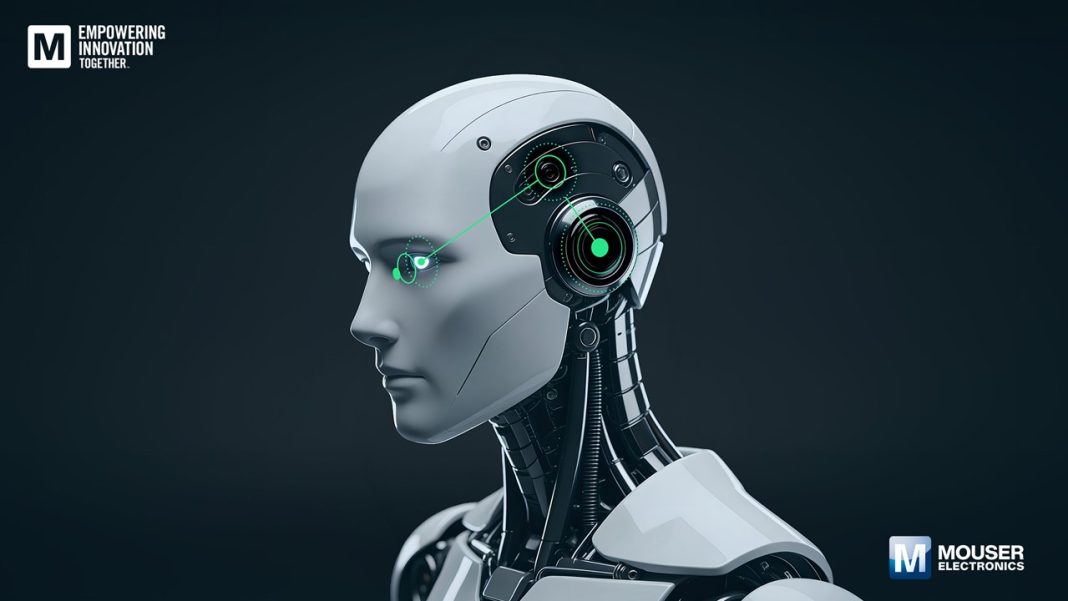

Mouser Electronics, Inc., the authorised global distributor with the newest electronic components and industrial automation products, today announced the latest instalment of its Empowering Innovation Together (EIT) technology series, Rise of the Robots, which explores key technologies behind humanoid robots and their potential for transformation. The series shares how these robots have progressed from simple machinery to critical tools used in caregiving, industrial automation, education, and even in the harshest environments.
While science fiction has long envisioned robots resembling humans, recent advances in sensing, actuation, AI, embedded computing, and power systems have enabled practical, real-world robotic deployments across industrial, healthcare, and high-risk environments. Engineers are now integrating multimodal perception, real-time control, and simulation-driven training using physical AI approaches to accelerate development and improve performance. Although many systems still require supervision, they serve as the foundation for collaborative robotic platforms capable of complex, human-like interaction. The latest EIT instalment explores the engineering design process, system integration challenges, and the role of legacy infrastructure, safety, and ROI in shaping scalable humanoid robot deployment.
“Humanoid robotics represents a convergence of sensing, control, and embedded intelligence that is reshaping how engineers approach system design,” said Jeff Newell, President of Mouser Electronics.“Through this latest instalment of Empowering Innovation Together, we’re providing engineers with the insights and resources they need to better understand and navigate that shift.”
In The Tech Between Us podcast, Raymond Yin, Director of Technical Content at Mouser Electronics, and Leo Chen, Head of US Operations at robotics manufacturer Engineered Arts, discuss the role of robotics in industrial settings and the engineering approach to creating human-like facial features and expressions. Chen also explains how the Engineered Arts’ humanoid, Ameca, came to fruition with careful design considerations.
“Developing humanoid robots requires solving complex, system-level challenges across perception, actuation, and real-time control,” said Yin. “In this episode, we break down how engineers approach those challenges and what it takes to build systems that can operate reliably in real-world environments.”
In addition to the podcast, the EIT series includes an in-depth video, technical articles, a topic-related , as well as subscriber-exclusive content, exploring practical applications of AI in engineering workflows. By examining the range of cases where AI can enhance technical expertise, engineers can develop tools to help reshape how people think, decide, and create while protecting privacy and control.
Established in 2015, Mouser’s Empowering Innovation Together programme is one of the electronic component industry’s most recognised educational programmes. To learn more, visit www.mouser.com/empowering-innovation/humanoid-robotics-systems and follow Mouser on Facebook, LinkedIn, X, and YouTube.
 technology series, Rise of the Robots, which explores key technologies behind humanoid robots and their potential for transformation.)