
A Glasgow-based circular economy business has helped demonstrate how a new technology could make it easier for products to be repaired, reused and recycled, helping manufacturers keep valuable products in use for longer.
A six month trial led by the National Manufacturing Institute Scotland (NMIS), in partnership with Glasgow-based Circulus CRM Limited (Circulus), successfully tested the use of digital product passports (DPPs) within a real-world remanufacturing environment.
Circulus helps businesses extend the life of electrical equipment through repair, refurbishment and remanufacturing, keeping products in circulation for longer while reducing waste. The project explored how digital product passports could support this work by creating a clear record of a product’s journey throughout its lifecycle.
Often described as a “digital record” for physical products, DPPs store important information about an item’s history, including how it was made, reused and eventually recycled. The technology is expected to play a key role in helping businesses meet future sustainability and product transparency requirements. The project also provided one of the clearest real-world demonstrations to date of how DPPs can be successfully integrated into existing operations without disrupting day-to-day business activities.
During the trial, NMIS worked closely with Circulus to map how information moves through the company’s operations and identify how product data could be captured and shared more effectively.
To test the approach without affecting day-to-day operations, a replica of Circulus’s HIVE business management system was created, allowing the technology to be trialled in an environment that closely mirrored live operations.
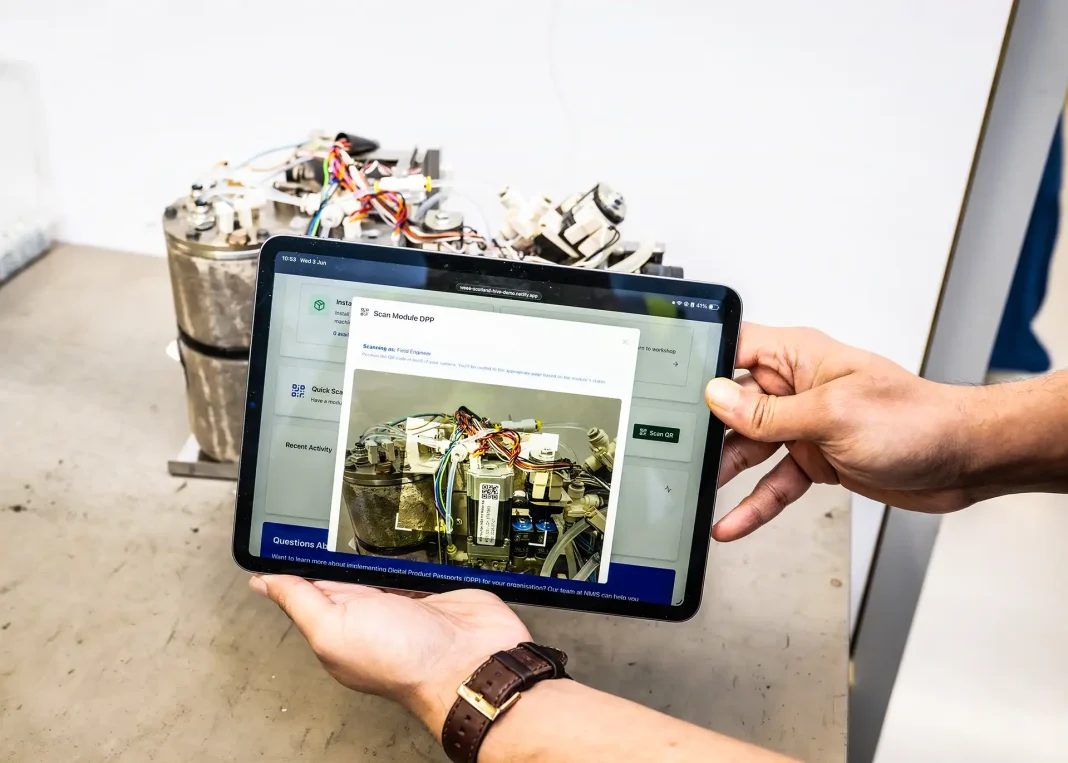
Using NMIS’s digital product passport platform, electrical assets were linked to secure digital records through QR codes, enabling authorised users to access information about a product as it moved through repair, refurbishment and recycling.
The project demonstrated that digital product passports can be successfully embedded into remanufacturing operations, helping businesses improve transparency, support sustainability goals and prepare for future regulatory requirements.
It also highlighted how the technology could help customers better understand the history and environmental impact of the products and assets they use.
Following the successful trial, customer feedback indicated strong interest in the benefits the technology could provide. The next phase of work will focus on piloting the system with major clients, refining functionality through real world deployment, and securing further funding to support scale up.
Awais Munawar, Digital Team Lead – Digital Factory at NMIS, said: “Digital product passports are becoming an increasingly important part of the conversation around sustainability and circular manufacturing, but there have been relatively few examples of them being tested in real industrial settings. This project shows how the technology can work in practice and demonstrates a realistic pathway for businesses looking to improve transparency, support circular business models and prepare for future requirements.”
Gerry Docherty, Managing Director at Circulus, said: “For a business built on repair, remanufacturing and recycling, the ability to follow a product’s journey from design through to end of life is hugely powerful. By working with NMIS, we’ve shown how digital product passports can become part of everyday operations and help businesses make more informed decisions about repair and reuse. Ultimately, it means more products can stay in use for longer instead of being discarded so it’s an exciting step forward for the circular economy and something we’re proud to be helping drive from Glasgow.”