
Fulling Motor North America (FMNA) is the North American operation of Jiangsu Fulling Motor Technology Co., Ltd., a professional motor manufacturer headquartered in Changzhou, China. Established in 1994 as a Germany-Swiss-China joint venture, Fulling has more than three decades of experience in stepper and DC brushless motor technology and has developed into a global supplier serving customers in Europe, the United States, China and other markets.
The company’s international foundation remains an important part of its identity. Fulling’s ownership structure includes Fulling China as well as German and Swiss partners. Its global organization combines sales, R&D, production engineering and quality-control functions, providing resources for customers in multiple regions.
“Fulling Motor has built its reputation by continually expanding its technical capabilities while staying focused on what customers need from a motion-control partner,” said Kelly Zheng, Operation Management, Fulling Motor North America. “What began with a strong foundation in stepper and brushless motor technology has evolved into a much broader portfolio that includes servo motors, frameless motors, joint modules and motor drives. That evolution allows us to support customers as their applications become more sophisticated.”
A Broadening Motion-Control Portfolio
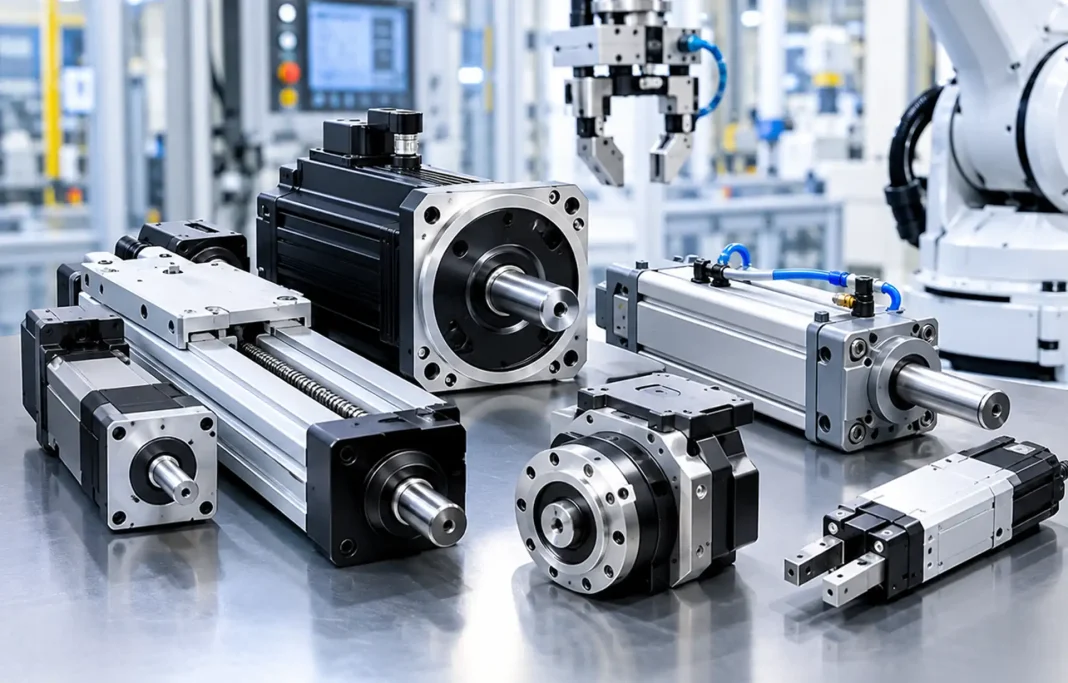
Fulling’s portfolio spans servo motors, hybrid stepper motors, DC brushless motors, gear motors and motor drivers, complemented by specialized solutions for robotics and other demanding applications. The company manufactures multiple configurations of BLDC motors, including outer-rotor and slot-less designs, as well as linear actuators, hollow-shaft, waterproof and enhanced-torque stepper motors.
Its servo offering includes frame sizes from 38-130 mm, with rated power from 50-3,000 W. Options include incremental or absolute optical and magnetic encoders and precision planetary gearboxes with multiple gear ratios.
Robotics is an increasingly important area of development. With a reputation of being one of the top motion control motor producers in China for robotic applications, Fulling offers frameless motors, integrated joint modules combining gearboxes, encoders and drivers, harmonic-gearbox joint modules, and linear modules incorporating motors, precision screws, encoders and force sensors. Its linear modules can provide repetitive positioning accuracy of ±0.02 mm, while its integrated joint solutions address applications ranging from robotic arms and collaborative robots to humanoid systems and dexterous robot hands.
“Every application presents different requirements,” Zheng said. “Speed, torque, precision, operating environment, size and integration can all affect the right motor selection. Our engineering resources allow us to look at those requirements from an application perspective and work with customers to develop an appropriate solution rather than taking a one-size-fits-all approach.”
Engineering for the Application
That application-driven philosophy is reflected in Fulling’s customization and product-development capabilities. The company can customize shafts and cables and develop stepping, BLDC and servo motors to meet specialized requirements. Its development process is managed using PTC Windchill and includes technical feasibility studies, simulation-driven design, CAD/ProE design, design FMEA, sample production, production FMEA, PPAP documentation and trial production.
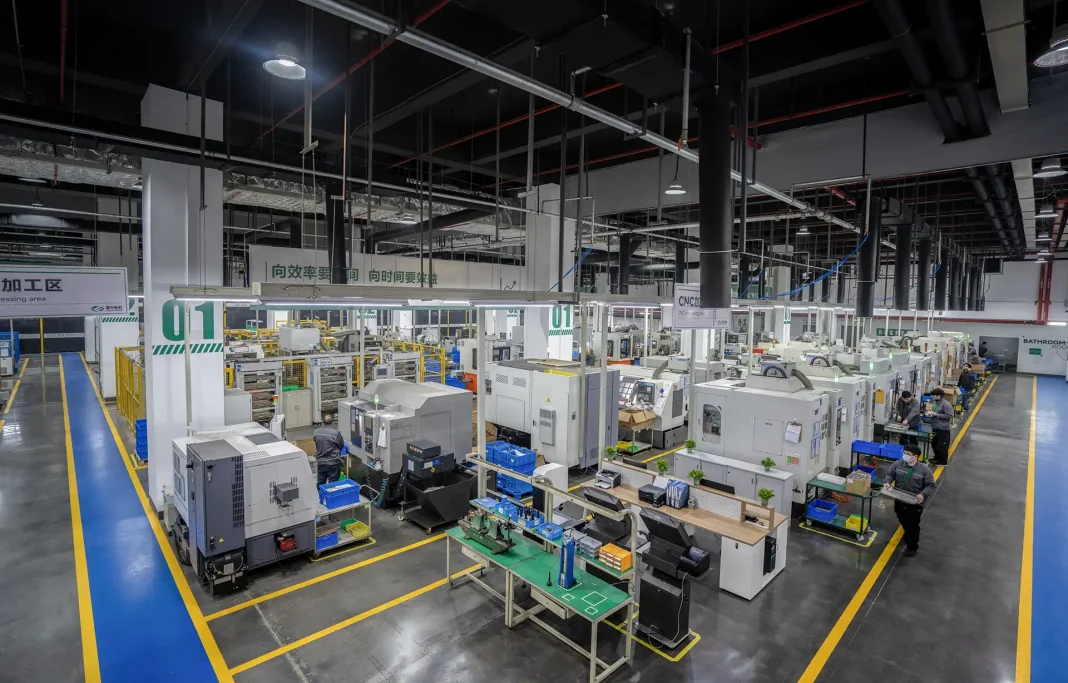
This enables Fulling to move beyond standard products when an application requires a different configuration or performance characteristic. Its manufacturing infrastructure includes CNC machining, automated winding, automatic assembly and robotic honing equipment.
The breadth of its OEM applications illustrates that flexibility. Fulling’s motors and gear motors are used in equipment ranging from dry-ice cutting and blasting systems and automated planting and seeding machinery to XYZ stages for 3D printers and commercial ice-cream equipment. Other applications include automated drapery systems, tire-inflation equipment and solar tracking systems.
Serving Diverse and Growing Markets
Fulling’s customer base spans industrial automation, robotics, medical technology, automotive, agriculture, logistics, printing, textiles, machine tools, packaging, laboratory equipment and telecommunications. The company also identifies applications in lawn and pool equipment, solar systems, automatic doors, SMT equipment, EV displays and LiDAR.
Medical applications further demonstrate the range of requirements Fulling addresses. The company identifies BLDC motors for automatic flow adjustment in medical devices and applications in ECMO equipment, as well as motors used for vibration systems, dental autoclaves and the adjustment of medical chairs and beds.
“One of the things that makes this industry exciting is the range of applications where motion control plays a critical role,” Zheng said. “Our technology can be found in robotics and industrial automation, but also in medical equipment, logistics, automotive systems, agricultural equipment, green-energy applications, appliances and many other products. Each market presents different challenges, and that diversity continues to drive our engineering development.”
Other customer applications include motors for smart logistics equipment, solar systems requiring UV protection and IP65 waterproofing, ultrasound imaging and biochemistry analyzers, automatic doors, SMT machines and printers, robotic joints, dexterous robot hands, humanoid robots, EV display systems and LiDAR.
Quality Built Into the Process
Quality is another foundation of Fulling’s approach. The company has maintained ISO 9001 certification since 2004 and IATF 16949 certification since 2008, with both certified by TÜV. Its products are CE certified and comply with RoHS and REACH requirements, while a portion carry UL certification for the U.S. market.
Fulling’s quality infrastructure includes RoHS, bearing, copper-wire, magnet, temperature and humidity, shock and vibration, noise and hardness testing, as well as Zeiss 3D measurement and Magtrol speed-torque testing. Final production testing covers insulation resistance, dielectric strength, phase resistance and inductance, holding torque, direction, running performance, noise and vibration, appearance and dimensions. Additional testing includes frequency vs. torque curves, no-load temperature rise and detent torque.
“Quality has to be built into every stage of the process,” Zheng said. “It is not something that can simply be inspected into a product at the end of manufacturing. Our quality systems, testing capabilities and engineering processes are designed to provide consistency and reliability because our customers depend on our motors to perform inside much larger systems.”
For FMNA, the combination of global manufacturing resources, application engineering, customization and disciplined quality processes provides a foundation for supporting customers as motion-control requirements continue to evolve.
“Our goal is to create value for the customer,” Zheng concluded. “That means listening carefully, understanding the application and bringing together the right combination of product, engineering and support. When we can help a customer solve a difficult motion-control challenge and improve the performance of their equipment, that is a successful partnership for us.”
As robotics, automation, electrification and intelligent equipment continue to expand, Fulling Motor is positioned to draw on more than three decades of motor-development experience while extending its capabilities into increasingly sophisticated motion-control systems. For North American customers, FMNA provides a local connection to that broader global engineering and manufacturing organization: helping turn the requirements of complex applications into practical motion solutions.