
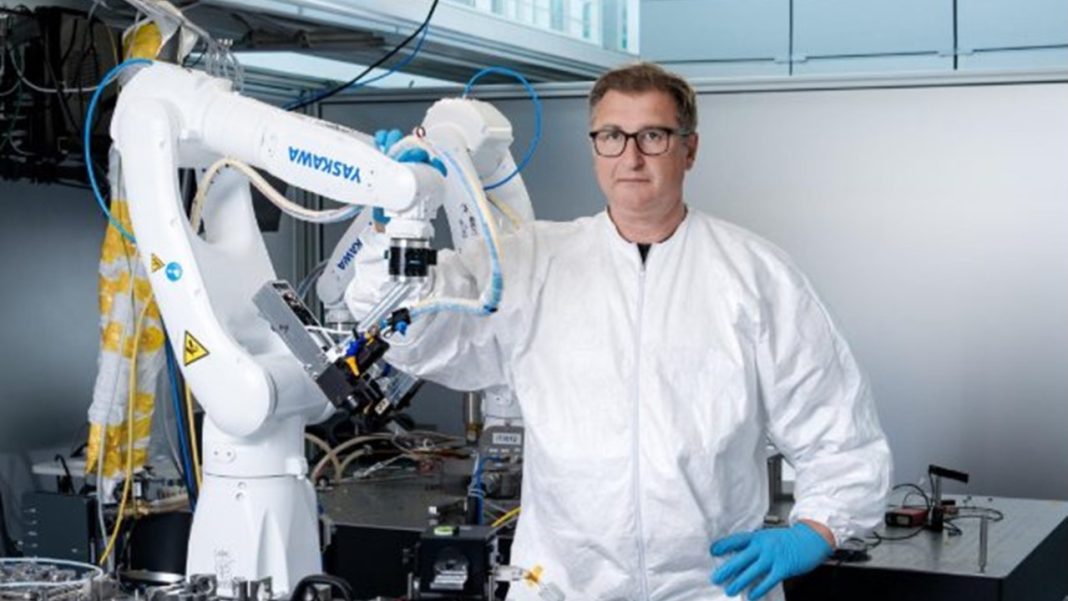

Manufacturing the latest generation of chips requires high precision; even sub-microscopic thermal damage makes a component unusable. According to experts at LITILIT, chips are increasingly manufactured using femtosecond lasers that fire extremely short light pulses to enable highly accurate processing with minimal thermal impact.
Last week, Apple announced that it would increase prices for its MacBooks and iPads by 20%, making it the latest company to raise electronics prices amid soaring chip costs and shortages. According to experts, the solution to increasing chip production lies not only in expanding manufacturing capacity but also in securing the right precision tools.
At the end of June, Apple said that it would raise prices for its devices due to chip shortages, noting that it had “never seen a component price increase this much, this quickly.” Other tech companies, including Microsoft, Sony, Dell and HP have also increased prices or are planning to do so. The pressure is being felt across the whole electronics market: over the past year, memory chip prices have spiked approximately six-fold, according to a Morgan Stanley report quoted by Reuters.
The main reason for the price hikes is the AI boom, which has driven memory chip costs to levels that manufacturers can no longer absorb.
According to experts at LITILIT, a startup manufacturing femtosecond lasers, as chip demand grows, the world may also face a shortage of precision tools to manufacture them. Nikolajus Gavrilinas, CEO of LITILIT, says that femtosecond lasers are increasingly used in manufacturing the latest generation of semiconductors due to highly accurate processing with minimal thermal impact.
“On a modern chip node, even sub-microscopic thermal damage makes a component unusable. As chips become more complex, manufacturers turn to femtosecond lasers that can remove material without causing any thermal damage to the surrounding structure. Since femtosecond lasers are also increasingly used in the production of the equipment for the data centers and many other advanced applications, the world might also face a bottleneck, as femtosecond laser production remains concentrated in a small number of facilities worldwide,” Gavrilinas says.
Gavrilinas notes that having strong domestic femtosecond laser production capacity is especially important for Europe, which has recently proposed Chips Act 2, aiming to double the EU’s global semiconductor market share from 10% to 20% by 2030. Similarly, the US and China are also pushing to increase local chip manufacturing.
To address the potential shortage of femtosecond lasers, LITILIT has just broken ground on a new femtosecond laser factory in Vilnius. The factory targets a production capacity of 3,000 lasers per year within a couple of years of launch, making it the highest-capacity femtosecond laser facility in the world.
The company is producing lasers based on a few patented inventions (link to patent 1, link 2), made by LITILIT co-founders Kęstutis Regelskis, Nerijus Rusteika, and Gavrilinas, in close collaboration with the Center for Physical Sciences and Technology (FTMC) in Vilnius. The company’s long-term vision is to bring femtosecond lasers to massive-scale applications, with similar cost, integration simplicity, and reliability as nanosecond fiber lasers.
“Typical femtosecond lasers can deliver exceptional application performance, but are notoriously difficult to manufacture and require highly qualified specialists in production. We developed lasers with reduced component complexity, a purpose-built design, and a high level of automation of the production processes. This makes them ideal for serial production at the scale required for manufacturing semiconductors and other components that demand high-precision tools,” Gavrilinas explains.
According to Gavrilinas, the lesson from the current chip shortage is that advanced manufacturing depends on more than the capacity of the lithography process. It also requires access to other enabling tools behind next-generation production: from femtosecond lasers to advanced packaging and precision material-processing systems.
Learn more at www.litilit.com.