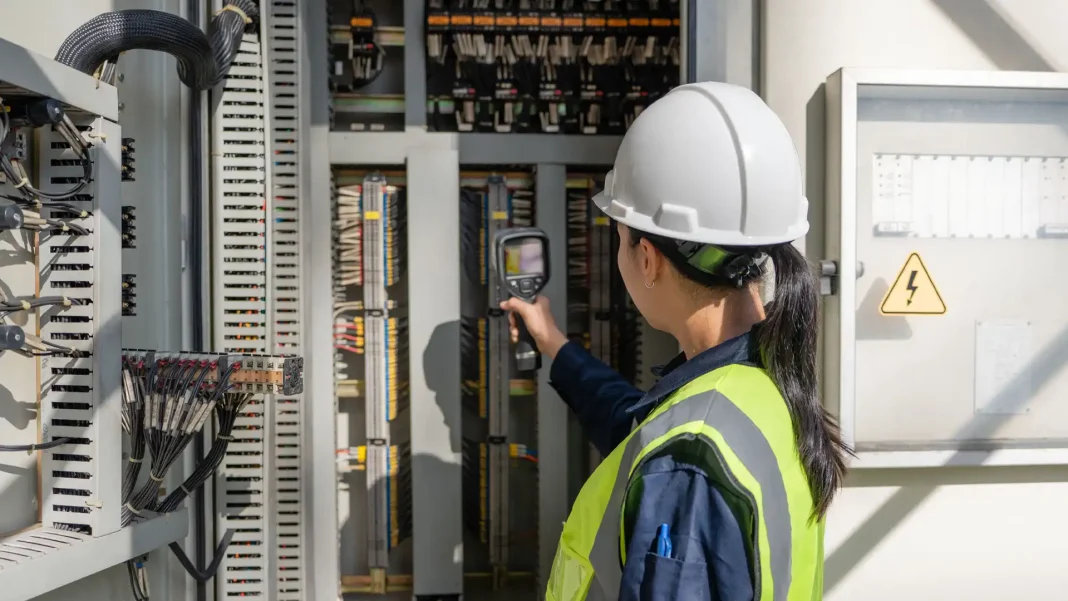

Walk into a UK food factory and you might expect to see automation at every stage of production. Yet despite the steady rise of automation across the food and beverage sector, many familiar food products are still being packed by hand.
This is particularly true in the fast-paced and highly flexible food-to-go market. Convenience items such as sandwiches, wraps, bakery products, snacks, salads and protein pots are increasingly everyday purchases, yet many manufacturers still rely on manual packing and palletising before they make their way from producer to retailer.
For food manufacturers producing goods with short shelf lives, tight margins and demanding delivery schedules, this presents an obvious opportunity. Packing and palletising are areas where automation can deliver immediate efficiency gains without requiring a complete overhaul of the production line.
A growing market with demanding requirements
Food-to-go products are typically single portions designed to be eaten on the move rather than served as a conventional meal. They are usually fully prepared or require minimal preparation, and are widely sold in supermarkets, convenience stores, coffee shops, bakeries and fast-food outlets.
It is a growing market. Food-to-go now accounts for nearly 24% of all eating and drinking-out occasions in the UK, with Lumina Intelligence forecasting growth of around 3.4% in 2026. The sector is expected to reach £24.9 billion in 2026, outpacing the wider eating-out market. Average spend per visit has also risen to £12.98, driven in part by premium add-ons and bundled meal deals.
For producers, however, this growth brings additional pressure. Food-to-go is characterised by high volumes, product variety, short shelf lives and the need for rapid movement from production through to retail — not easy things to achieve if you’re still relying on manual labour rather than automation.
Flexibility is becoming essential
One of the biggest challenges facing food-to-go manufacturers is that retailers increasingly want exactly what they need, when they need it. Rather than producing huge quantities for storage and distribution through traditional networks, manufacturers may need to supply smaller quantities more frequently, often delivering directly to individual stores. With retailers under pressure to minimise waste and inventory, there is little appetite for products sitting in warehouses.
Manufacturers therefore need to be able to respond quickly to changing orders, produce a wide range of products and get those products packed and dispatched with minimal delay. But at the same time, they face continual pressure on margins. This is where automation can help.
Start with the quick wins
There is a temptation for food manufacturers to think about automation as an all-or-nothing investment. A business may believe it needs a fully automated production and packaging line, only to receive a multi-million-pound quotation that makes the project difficult to justify. The result, of course, is that nothing changes.
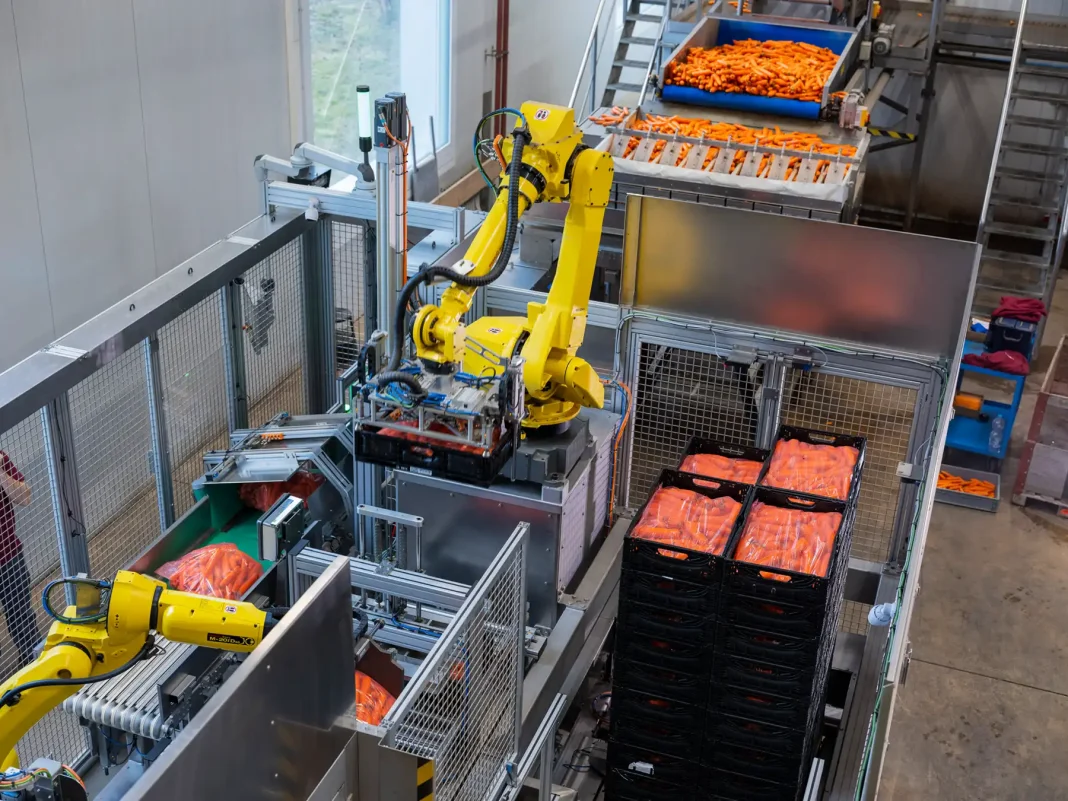
A more practical approach is to identify the areas where automation can deliver an immediate, measurable benefit. For many food-to-go manufacturers, palletising is an obvious example. With pallets often being made up of random products spanning a wide variety of shapes, sizes and dimensions, today’s smart automated solutions can utilise vision systems and machine learning to determine the most efficient pallet patterns, and then use robots to pack accordingly. This will not only improve efficiency and cut waste, but also reduce manual handling and allow employees to be redeployed to tasks where human input adds greater value.
Automation doesn’t have to mean sacrificing flexibility
Automation can provide the repeatability and speed required for high-throughput operations while still accommodating changes in production. And the right system can help manufacturers increase efficiency without compromising their ability to respond to customer requirements.
The key, however, is choosing a solution that suits the manufacturer’s actual operation, rather than trying to force the operation around a particular piece of technology. This is where the expertise of the wider automation supply chain becomes important. Robot OEMs have detailed knowledge of their own technologies, but they may not always have the specialist understanding required to determine how those technologies should be applied within a particular food manufacturing environment.
This is where specialist integrators (SIs) can play an important role. Here at FANUC UK, our SI network includes experienced food-industry integrators that can help manufacturers identify where automation will have the greatest impact, and design a solution around the specific requirements of their production and packing operation — not the other way around.
The financial case for automation
There is also a compelling financial argument for taking a targeted approach to automation. A well-designed automation project can potentially deliver a return on investment in around two years, depending on the application and the costs being replaced or avoided. However, financing can make the proposition even more accessible. For example, if an automated solution were financed at £14,000 per month against an existing staffing cost of, say, £16,000 per month, the direct monthly cost comparison could result in a payback period of only around 29 days.
The precise economics will, of course, vary from one application to another. Labour costs, operating hours, throughput, equipment costs, financing arrangements and staff availability all need to be considered when calculating the actual return. But the broader point remains: automation does not necessarily require a huge capital investment or a lengthy payback period.
There is another consideration that is sometimes overlooked when food manufacturers assess automation projects. Namely, the future value of the equipment. Standard palletising robots and other established automation technologies can be easier to repurpose or resell than highly bespoke automation systems. In the fast-moving food sector, markets change, product ranges evolve and retailer requirements can shift quickly. An investment in flexible, standardised automation can therefore offer greater long-term value beyond the immediate productivity improvement.
Building a more responsive food-to-go operation
What is clear is that while the UK’s food-to-go market is growing, growth alone does not guarantee profitability. Manufacturers are being asked to deliver greater variety, shorter lead times and smaller, more frequent orders while operating under continuing pressure to control costs.
By identifying the operational bottlenecks where automation can make an immediate difference, food-to-go producers can take a measured approach to investment. Palletising and packing offer particularly accessible starting points, providing improvements in throughput, consistency and labour utilisation without requiring a complete production-line transformation.
Ultimately, the manufacturers best positioned to compete in the fast-moving food-to-go market will be those that can combine speed, flexibility and efficiency. Strategic automation can provide an important part of that equation, helping producers respond to retailers’ changing demands while protecting margins and keeping products moving from factory to store as quickly as possible.
For food-to-go manufacturers, the question may therefore be less about whether to automate and more about where automation can deliver the quickest and most valuable return.