
Recent major venture capital (VC) reports from KPMG and PitchBook confirm that AI remains in the lead, accounting for more than half of all investments this year. Data from CB Insights shows that investors’ attention inside the AI market is shifting rapidly toward industrial humanoid robotics. As a result, investors argue the flood of AI capital is pushing robotics toward a speculative zone, with too many startups promising breakthroughs without commercial evidence.
Last quarter, industrial humanoid robotics captured 17 deals – the most of any category. AI was still the primary destination for investors, split into several categories, such as coding AI agents and copilots (14 deals), end-to-end software development AI agents (12), and others.
Rapid growth of the sector has already sparked fears of a bubble from the Chinese leading economic planning industry, which said that the humanoid robotics industry needs to “balance the speed against the risks of bubbles,” Bloomberg reported.
Investors’ appetite for humanoid robots is largely driven by AI, because AI gives humanoids a commercial potential that was previously not possible.
According to Daiva Rakauskaitė, the Partner and Manager of Aneli Capital, a company that manages a €35 million fund for early-stage Central and Eastern European startups, there are strong similarities between today’s AI-driven investment boom and the dotcom bubble in the early 2000s, leaving many startups exposed. She expects an AI bubble burst in 2-3 years.
“Many AI startups that can’t yet generate revenue will fail, but we’re reaching a consensus on that in the market. While the same risks persist in humanoid robotics, many investors tend to overlook this,” says Rakauskaitė. “However, it is important to distinguish robotics from humanoid robotics; industrial and logistics robots already generate revenue and can deliver measurable results, while humanoids can’t yet prove their commercial value.”
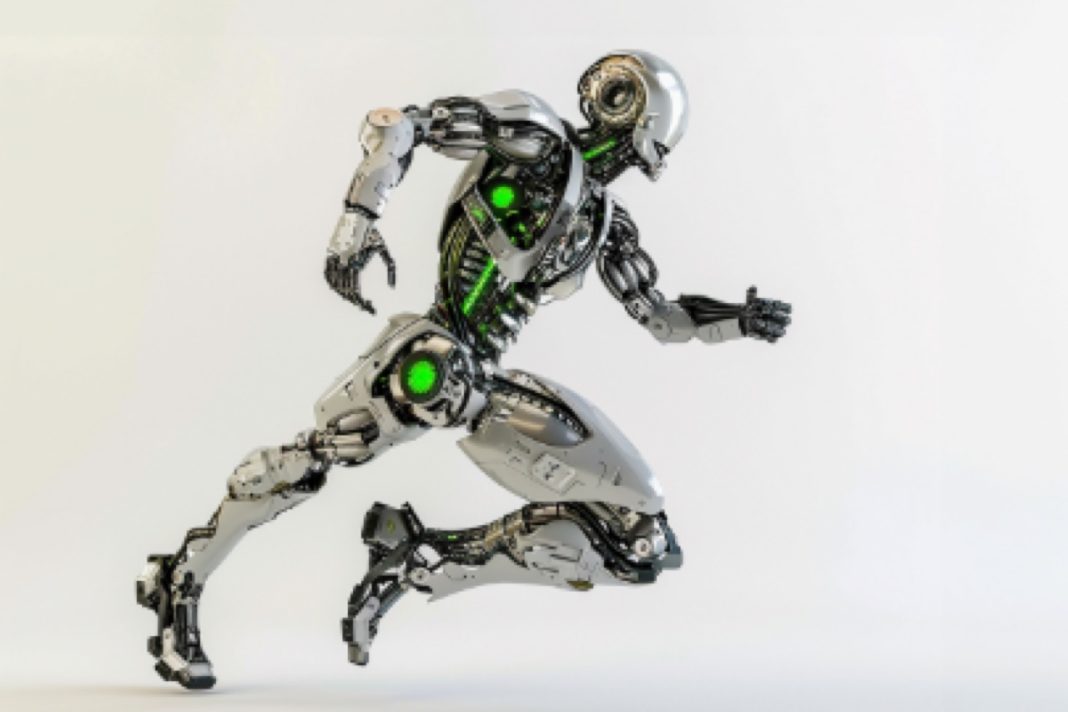
Currently, companies around the world demonstrate prototypes of robots performing actions from running to boxing, sparking interest from users and investors. However, in the real world, they have few practical commercial applications.
Similar challenges also persist for industrial humanoid robotics. These companies face challenges with inference (ability to make decisions in real time), dexterity (how well the robot can physically handle things), reliability, and cost, which limit the initial use cases to factories and warehouses with predictable sets of tasks, CB Insights report claims.
According to Rakauskaitė, especially now, when investments are driven by hype, VCs should not forget the fundamentals and prioritize revenue-first philosophy, where real money matters more than growth at all costs.
“Investments in robotics and AI are crucial for the future development of humanity. But investors should remain disciplined and back companies that have realistic goals based on economics, not hype. From day one, startups should aim for early revenue streams through licensing, partnerships and have a clear model of monetization in the near future. The same revenue-first philosophy can be applied to any field,” Rakauskaitė says.
Despite early signs of a bubble in humanoid robotics, she remains confident in the broader robotics sector, where cheaper hardware and rapid advances in AI are accelerating real-world deployment.
According to Rakauskaitė, robotics is an especially promising field for the CEE startups. The region is located close to Germany, the largest industrial robotics market in Europe, which provides a major strategic advancement to scaling.
“The region also has lots of hidden talent. That’s why we dedicated our new fund for this region, aiming to support the talented founders with hands-on guidance and quick decision-making. Many hype-driven investors pull back once the hype fades. Yet to create real innovators, VCs must support them through their full journey. That’s exactly what we are going to do,” Rakauskaitė concludes.