


Rolling out a Manufacturing Execution System (MES), which tracks and manages production on the factory floor, and connecting it with enterprise-level ERP platforms that manage business functions such as orders, stock and planning, can fundamentally transform operational capabilities.
Having a unified approach also enables comprehensive batch traceability, offering manufacturers greater oversight and control throughout their production processes.
While the concept of transitioning to integrated systems and establishing two-way data sharing between systems can appear somewhat futuristic, with the appropriate support and a well-defined strategy, the process is straightforward. Andrew Yates, Managing Director of Endoline Automation and Endoline Robotics, explores the implementation steps UK food and beverage processors need to consider.
Tracking the order to pallet pipeline
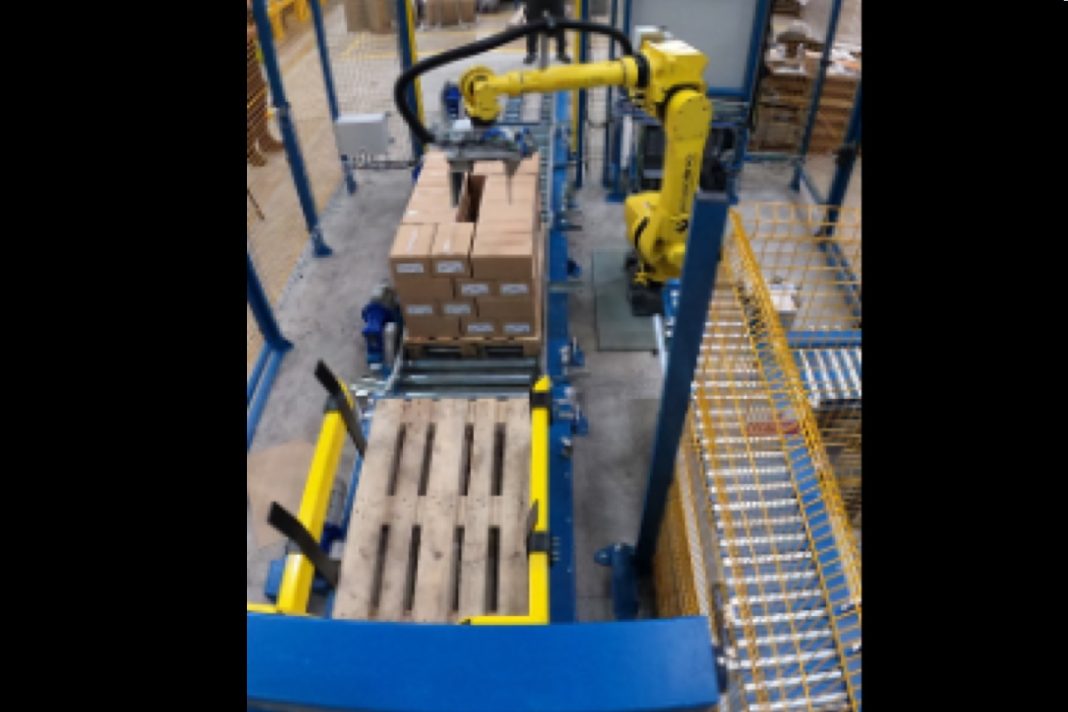
By integrating Endoline robotic packaging and palletising machinery with customised MES reporting tools, manufacturers can connect directly into SAP and other enterprise resource planning (ERP) platforms. Linking business planning to shop floor operations, this integrated setup eliminates data silos, reducing inefficiencies, miscommunication and errors, resulting in a smoother workflow.
Although there may be a strong impulse to integrate MES software and automation hardware simultaneously, Endoline usually recommends a phased approach. “This will typically depend on the scale of the installation project. But we would often suggest delaying full ERP/MES programming until the physical hardware is operational,” confirms Andrew.
The reason, he explains, is to ensure the high-speed packing and palletising lines have been fully tested and validated. “It never takes long for our in-house specialists to roll out the MES coding once the boxes start moving. Taking this approach ensures that the digital systems are fully aligned with how the production line actually operates,” Andrew explains.
Optimising production scheduling
The extraction of data can be as complex or as simple as processors want. Smart factories are increasingly adopting a central data system (often called a Unified Namespace or UNS), enabling both MES and ERP systems to share data efficiently. Having this standardised connectivity makes it easier to scale up the use of production data.
For ease, many utilise OPC-UA and RJ45 Ethernet interfaces, as these formats enable manufacturers to extract detailed, real-time data from most machines. For example, checkweigher systems can calculate rejection versus acceptance rates in real time, while case packing robots can report the exact volume in every box and the count of boxes stacked on a pallet. Additionally, there are tools that can generate sustainability metrics, enabling managers to monitor energy use and air consumption in real time.
“Endoline develops our middleware in-house. This helps customers as it is designed specifically to support our equipment. It also enables a food processor or packing operation to easily move from manual processes to more advanced, multi-line automated palletising as the business grows,” highlights Andrew.
Accuracy and alignment
The availability of detailed, real-time data fundamentally changes the landscape for supply chain planning. With the integration of MES and ERP systems, the entire production and packing process becomes more streamlined and efficient.
For example, manual tasks such as interpreting production requirements or sending instructions through paper-based methods are eliminated. Instead, the ERP system automatically communicates requirements to the MES, which then instantly sends clear instructions to the robotic systems on the shop floor. This automation reduces the need for human intervention and ensures that information flows smoothly across all operational departments.
The ability to deliver production instructions immediately and without error is especially crucial for food safety and traceability. “An integrated approach ensures that instructions are shared accurately and efficiently from business systems to shop floor robotics. By aligning production activity with wider business goals, manufacturers can minimise mistakes, improve efficiency and maintain consistent product quality,” explains Andrew.
Decentralising data at Life Health Foods
This was the cross-departmental data model adopted by Life Health Foods. From 11 cereal packing lines, product cases are labelled by one of eight GS1-compliant print-and-apply label systems. Using Endoline’s ERP software, all label and case information is automatically fed into the company’s SAP system.
The result is a “single source of truth” where automated sorting sensors know exactly what is in every box, when it was produced and where it needs to go, all without any human intervention.
The ERP reporting system plays a critical role in supporting the management of multiple SKUs for the UK cereal manufacturer. Real-time visibility enables immediate identification of any quality or stock issues that may arise during production. This proactive approach ensures that potential packing or palletising bottlenecks are detected and addressed before they escalate into significant problems. As a result, Life Health Foods is able to maintain a smooth production flow, minimise disruptions and uphold consistently high standards across all product lines.
“Processors that are moving towards a centralised data-sharing approach and two-way data flow between systems are reporting significant benefits,” adds Andrew. The central data model (UNS) in particular represents a shift away from rigid system connections, allowing systems to access and share data more flexibly.