



The UK’s aim to become an AI powerhouse is built on supply chains controlled by other nations, warns a renewable technology pioneer.
Most of the technology that underpins AI, such as semiconductor chips, is produced in the US and China, raising concerns that the UK’s drive to transform health services, tackle national security concerns, and turbocharge the economy with AI is vulnerable to supply shortages.
Emma Armstrong is the Sustainable Electronics Ambassador and Group Commercial Director at In2tec, which produces pioneering tech that allows components and substrates in circuit boards to be recovered without stress or damage – enabling the reuse, repair, or resale of viable components.
She said: “Semiconductor chip production is global, and multiple regions handle each stage of production, creating dependency and vulnerability.
“The UK is underrepresented in chip production, and supply shortages caused by geopolitical upheaval can cause price rises and disrupt research and infrastructure. If the UK Government is serious about the UK’s AI potential, MPs and civil servants need to ensure technology sovereignty.
“Pivoting to tech products designed to be disassembled allows components to be easily replaced and recycled domestically, reducing reliance on imported chips and ensuring supply chains are not subject to the whims of outside powers.”
Emma adds that sovereignty requires collaboration between the technology sector and suppliers. In2tec is actively working with industry partners to develop proof-of-concept units and assemblies that bring circular electronics principles into real-world AI applications.
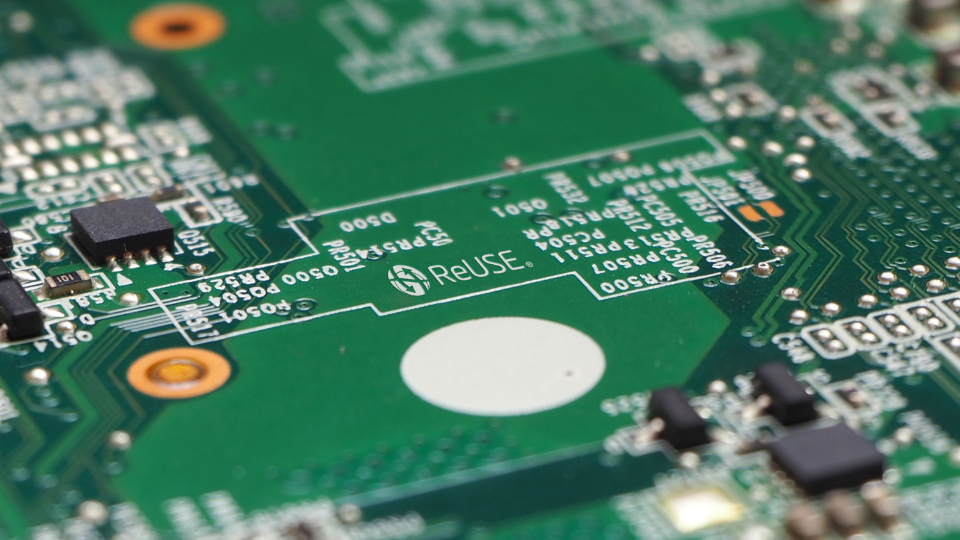
In2tec’s sustainable electronics mission is underpinned by ReUSE®, a series of materials, processes and design principles used to manufacture PCBAs, and ReCYCLE™, the ultra-low-energy process for unzipping printed circuit board assemblies (PCBA) – the foundation of nearly all technology – to the original bill of materials (BoM).
The technology’s versatility allows global commercialisation and a vast reduction in the overall energy used to manufacture and process it when it reaches its end of life, something that is not possible when using conventional PCBA processes or materials.