

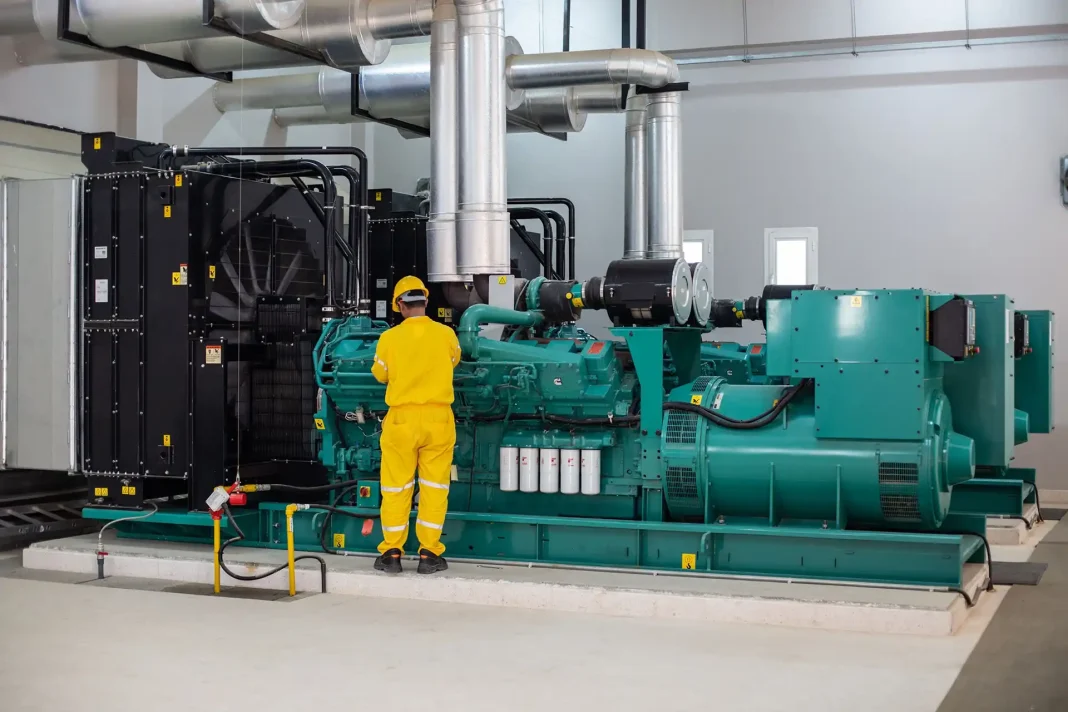


From drinking water and sanitation to industrial processes, water and wastewater services are essential services. But treatment plants rely on electrically driven systems that must operate continuously to maintain supply and protect public health. As ageing infrastructure, extreme weather and rising demand place increasing pressure on operations, reliable power is becoming critical to resilience. Here, Andrew Keith, division director of load bank manufacturer Power Prove, explains how load bank testing helps validate backup systems and maintain continuity during mains power disruption.
Recent events have shown how quickly disruption can affect essential water services. In January 2026, a major incident was declared after thousands of properties across Kent and Sussex experienced no water, intermittent supply or low pressure. South East Water attributed the disruption to a combination of Storm Goretti, freezing conditions, burst pipes and power cuts, which affected its ability to treat raw water at the normal rate. Ofwat later opened an investigation following repeated outages, including further supply problems linked to freeze-thaw events and Storm Goretti. The incident underlined the importance of resilience across the systems that keep water moving, treated and available to customers.
The wider resilience challenge is reflected in recent industry data. CCW’s Water Mark 2025 found that “supply interruptions across the water industry increased by 58 per cent compared with the previous year, with average interruption times rising above regulatory targets”.
The power behind water infrastructure
Water treatment plants rely on a complex combination of pumps, filtration processes, chemical dosing systems and monitoring equipment. Each of these components depends on stable electrical supply. When grid power is interrupted, even for a short period, the impact can extend beyond operational inconvenience. Reduced treatment capacity can affect service continuity, while disruption to wastewater processes may introduce environmental and regulatory risks.
For operators, maintaining continuity is not simply a performance target but a regulatory expectation, with increasing focus on resilience and customer protection.
Why backup power needs to be proven
To mitigate these risks, many facilities depend on standby generators to support operations during outages. However, installing backup power is only part of the solution. In many cases, generators are tested through routine start-up checks or low load runs that confirm the system can switch on. While this provides reassurance at a basic level, it does not fully demonstrate how the system will behave under sustained demand.
A generator that starts successfully is not necessarily a generator that can support the full operational load of a treatment plant. Water infrastructure presents a challenging electrical environment, with large motors, fluctuating demand and continuous operating requirements. Pumps in particular can create significant load variations during start-up and operation. These conditions place stress on voltage regulation, frequency stability and cooling systems. Weaknesses in any of these areas may remain hidden until the generator is required to operate under real conditions.
Understanding the hidden risks
This creates a critical gap in resilience planning. Systems may appear ready but have not been proven under the conditions they are expected to handle during an actual outage. Issues such as voltage instability, frequency drift or inadequate cooling response can develop when load increases, leading to performance limitations or failure at the point they are most needed.
Load bank testing provides a way to close this gap by applying a controlled electrical demand that simulates real operating conditions. By progressively increasing load to reflect plant requirements, engineers can assess how a generator performs across its full operating range. This includes verifying output capacity, monitoring voltage and frequency behaviour and evaluating thermal performance during sustained operation.
Testing in this way allows operators to identify and address issues before they affect critical services. It also provides a clearer understanding of how backup systems will respond during extended outages, when treatment processes must continue without interruption. Rather than relying on assumptions, operators gain measurable evidence of system capability.
As expectations around infrastructure resilience continue to grow, particularly in sectors that support public health and environmental protection, validating backup power performance is becoming an essential part of maintenance strategy. For water and wastewater operators, confidence in standby systems is not simply about reliability but about ensuring continuity of service under the most challenging conditions.
Power Prove provides load bank solutions designed to support critical infrastructure operators in testing and validating backup power systems under realistic conditions.