






The 2026 Global Energy Talent Index, built on responses from more than 9,000 professionals in 143 countries, found close to the same answer everywhere it asked: engineering and technical roles are the hardest in the sector to fill, and only about a third of hiring managers are actively recruiting graduates to replace the people retiring out of them. That finding sits behind the talent conversation running through Automa 2026 (Oil and Gas Automation and Digitalisation Congress), taking place in Amsterdam on 5-6 October 2026.
None of this resolves on its own – The IEA puts a number on where it is heading: in advanced economies 2.4 energy workers are nearing retirement for every entrant under 25, and more than half of the 700 energy companies, unions and training bodies surveyed for the report already describe the resulting bottlenecks as critical. Closing the gap by 2030 would require 40% more qualified entrants a year than the sector currently attracts, an estimated USD 2.6 billion a year in additional training investment worldwide.

The same survey behind the 143-country finding adds a second layer to the problem. Willingness to relocate for work has fallen to 75% in 2026, down from 89% just four years ago, so the smaller pool of available engineers is also less willing to move to where the vacancies are. AI use among oil and gas professionals nearly doubled over the same period, now reported by 45% of respondents, which raises the bar for what a new hire needs to know on their first day rather than lowering it.
EY research narrows the picture to three roles: automation and control systems engineering, OT cybersecurity and digital programme leadership, the same disciplines companies are already spending on software and hardware to support. 90% of executives in the same survey agree that investment in reskilling is essential, yet fewer than half have an actual plan for it. The oil & gas sector is also not the only industry chasing these skills. Defence, utilities, manufacturing and renewables are hiring for the same profiles, often at the same salary bands.
Automa 2026’s sessions open on that question directly, framed around engineering digital transformation and talent rather than technology alone. The same shortage that shows up in the numbers above shows up again here, just discussed at boardroom level instead of team level.
Move further down the programme and the pattern holds. Bernd Kalusche of Siemens (Germany) presents “From 3D Printing to Digital World: Case Study with American Partner” and Antonio Schiavone of Tecnimont (Italy) follows with “AWP and Real-Time Sync: Plant & Simulation for Better Control” – both speaking to the construction-data-meets-digital-systems combination EY names as scarce. Jesus Gonzalez Lopez and Juan Manuel Tomé Lara, both of Moeve in Spain, address the same intersection from the refinery side in the Digital Refineries session.
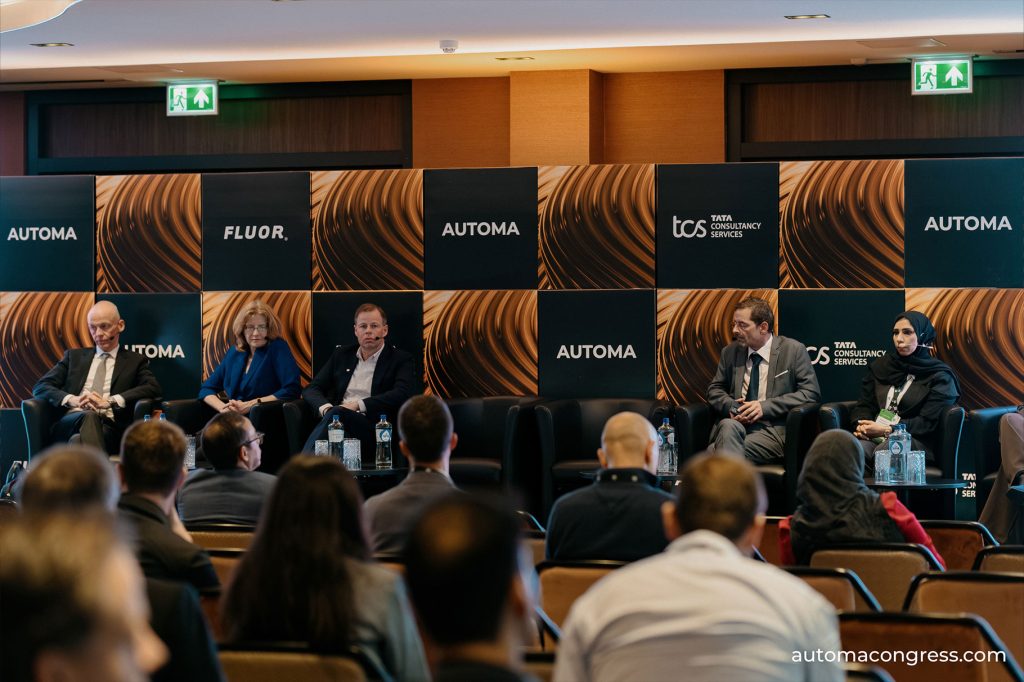
On the Leaders Talk about AI-powered transformation in energy and governance, Anandh Rajappa (Head of Business Value Management at Tata Consultancy Services UK & Europe) addresses a version of the same shortage from the consulting side, where the people who can turn an AI pilot into a governed, working system are in demand across every sector at once, not just energy.
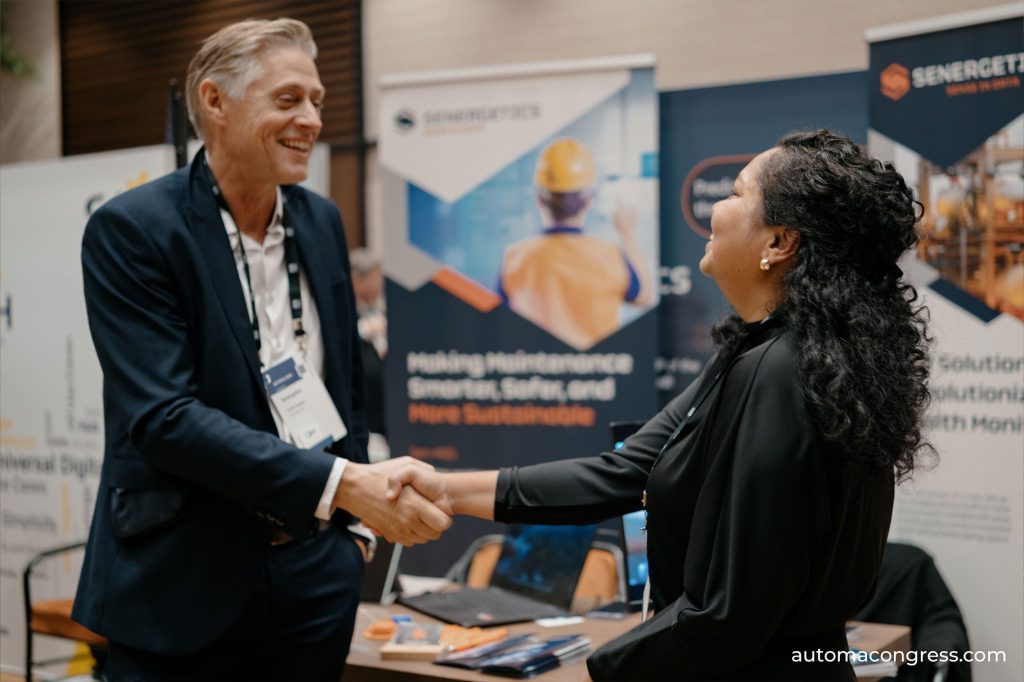
None of the speakers above set out to solve the talent gap directly – Kalusche is walking through a 3D-printing case study, Gonzalez Lopez and Tomé Lara are comparing notes on simulators, Rajappa is presenting on agentic AI. However the shortage sits underneath every one of these sessions anyway: each is a demonstration of the exact skill set the sector cannot currently hire enough of. That may be Automa’s clearest value on this specific problem – not a panel titled “the talent gap,” but two days where delegates from 190 companies watch each other work through the same challenges the GETI and EY numbers describe, and start comparing notes on how they are solving it in-house.
That comparison is worth more than it sounds. If 2.4 energy workers are retiring for every one entrant and the pool that remains is less willing than it was four years ago to relocate for a vacancy, then the same unfilled role in Amsterdam, Aberdeen or Abu Dhabi stops being three separate hiring problems and becomes one shared one – the same vacancy, in a different country, that gives this piece its title. A two-day Сongress cannot train 40% more graduates a year, and it will not cover the USD 2.6 billion training bill closing that gap requires. What it can do is put the shortage in front of the engineers, operators and technology providers who are actually meant to solve it, across more than 260 closed-door B2B meetings, rather than leaving it as a line in a report nobody in the room has read.
See the full agenda and register for Automa 2026: https://sh.bgs.group/4py
,%20taking%20place%20in%20Amsterdam%20on%205-6%20October%202026.)