

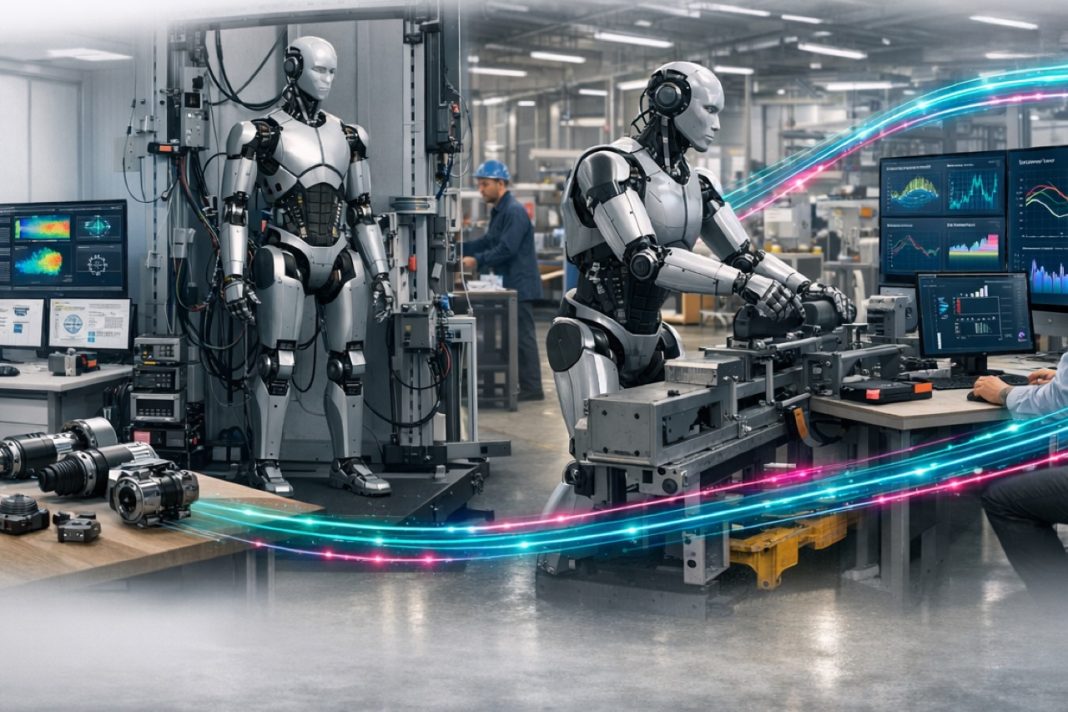


Despite significant progress, reliability remains one of the hardest problems in robotics – not because of a lack of engineering skill, but because robots operate under conditions that challenge traditional durability models.
Unlike conventional machinery, robots rarely experience uniform duty cycles. Loads change constantly as tasks shift, environments vary, and users interact in unpredictable ways, making early design assumptions difficult to sustain in the field.
Failure modes are also becoming increasingly interconnected. Mechanical wear, electronic stress, sensing accuracy, and control behaviour influence one another in tightly coupled architectures. As a result, failures are often systemic rather than isolated, propagating across subsystems in ways that are difficult to predict late in development.
HBK’s white paper argues that the next phase of robotics innovation demands a fundamental shift in how reliability is engineered. Durability and reliability can no longer be treated as one‑time verification exercises. They must become lifecycle disciplines – embedded from the earliest design concepts and continuously informed by real operating behaviour.
As robots take on more autonomous and critical roles, reliability becomes the foundation on which trust is built. Intelligence and autonomy may define what robots are capable of, but durability, predictability, and uptime define whether those capabilities can be deployed at scale.
Organisations that embed reliability into their engineering mindset, from early design through deployed fleet operation, will be better positioned to adapt, scale, and lead as robotics continues to move from experimental promise to operational reality.
Read HBK’s full white paper here: media.hbkworld.com