

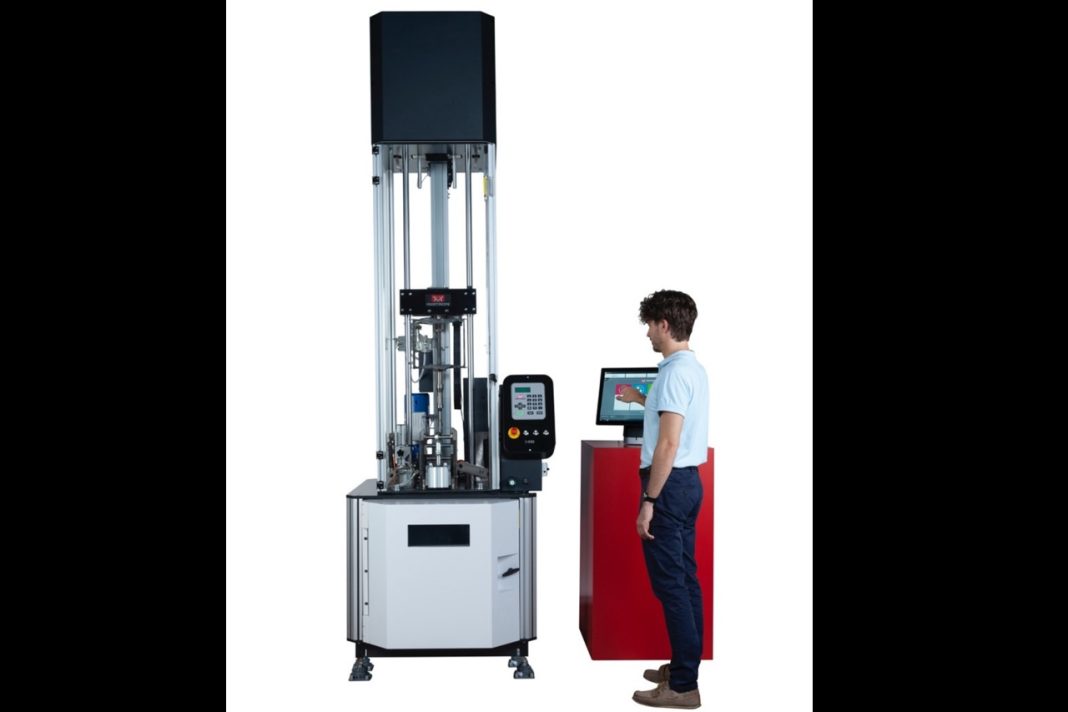


Materials testing instrumentation manufacturer Instron has announced a major upgrade to the manufacturing process for its drop tower impact testing systems, delivering shorter lead times and increasing production efficiency. The upgrade switches a cellular production system to an in-line model, encouraging a simpler step-by-step process to manage operation workload and tools more effectively.
The switch to an in-line production model forms a part of Instron’s broader Operational Excellence program, aiming to streamline operations, enhance product quality, and reduce customer lead times. Plant layout and production line rearrangement are also key to the program, with the drop tower lines accounting for 336 of the plant’s 800 square meters, increasing space for products from 10 to 25 per cent.
In the traditional cellular process, each drop tower was built from start to finish within a single production cell, requiring operators to move materials and tools frequently and switch between complex tasks quickly. The new in-line model transports products through defined stages, allowing operators to remain in specific tasks and limits material movement. This helps guarantee operator safety, together with enhanced economics. The new line has been created thanks to joint work between engineering and operation, providing a much more people-oriented line.
This change allows operators to pre-assemble and test 80 per cent of each system before receiving customer orders. While comprehensive evaluations will be completed at the end of the year, early results suggest customer lead times has strongly decreased for standard drop towers.
“We have already recorded a significant decrease – around 50 per cent – for the standard drop tower,” explains Engineering Manager Leonardo Petrelli. “Instron strives to continuously improve the manufacturing process by encouraging feedback from its operators. In developing the production line further, customer lead times will continue to decrease.”
To learn more about Instron’s drop towers and its role in materials testing, visit its website.