




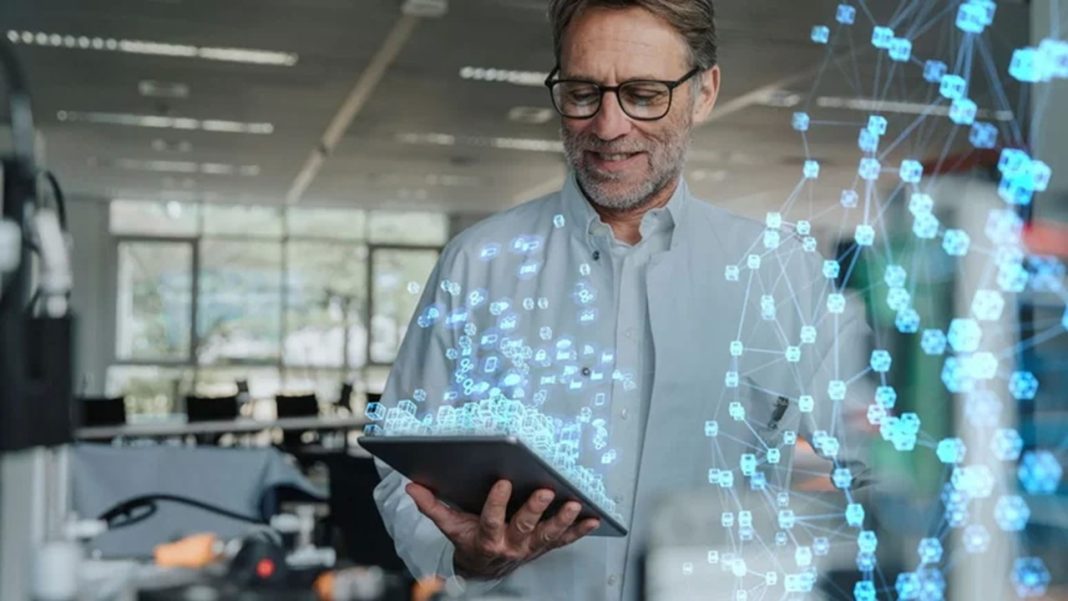


The IoT is constantly evolving. According to Giesecke+Devrient (G+D), several trends are emerging: the integration of artificial intelligence (AI), edge computing and blockchain, standardization for more efficient management of IoT devices and the use of IoT to achieve sustainability goals.
The number of IoT devices is growing rapidly and IoT applications are increasingly being used in a wide range of areas such as transportation and logistics, agriculture, energy management, manufacturing and smart city concepts. However, there are still some limitations and challenges when it comes to implementing IoT scenarios. However, new developments will accelerate and simplify the further introduction of IoT. G+D sees five key trends in particular that will contribute to the secure and expanded use of IoT.
- AI and machine learning (ML) lead to intelligent IoT systems
AI and ML are modernizing almost everything, including the IoT. By analyzing large amounts of data, AI is improving IoT applications in areas such as predictive maintenance and energy management. Combining the analytical capabilities of AI with the data collection and monitoring capabilities of IoT creates an ecosystem where operational insights are gathered more efficiently. The result is smarter, more responsive IoT systems.
However, there is one important point to bear in mind when integrating AI. AI relies heavily on accurate, validated and non-manipulated data to learn, make decisions or provide recommendations. This means that data integrity, based on the use of trusted and authentic data sources, is crucial to build trust in IoT AI ecosystems.
- Edge computing improves IoT performance
Edge computing allows data to be processed or at least pre-processed closer to the source. This also reduces the amount of data that must be sent to a central data center in the automotive sector, for example. Edge computing significantly reduces latency, which is important for real-time applications such as industrial automation in manufacturing. The expansion of 5G networks will further improve communication between these devices and enable faster and more efficient data processing. Furthermore, the integration of AI and ML with edge computing is also expected to increase in the future, enabling edge devices to make complex decisions independently.
- Blockchain increases IoT security
As IoT devices increasingly handle sensitive data and its integrity, the role of blockchain in strengthening IoT security is becoming increasingly important. The decentralized nature of blockchain, with the ability to ensure the authenticity and security of data transactions across the network, provides enhanced data integrity. Blockchain can therefore become an important component in protecting against the growing cybersecurity threats in the IoT landscape.
- SGP.32 simplifies the management of IoT devices
SGP.32 is a new specification published by the GSMA in May 2023 for remote SIM provisioning. As an example, there will be no need for additional connections via Wi-Fi or Bluetooth when commissioning an IoT device. This simplifies both the hardware of the device and logistical processes. For example, solutions such as the AirOn360® IoT Suite from G+D can be used to centrally manage the connectivity of entire device fleets via SGP.32. Instead of the SMS-based communication of the predecessor specification SGP.02, SGP.32 uses a faster and more reliable IP-based protocol. The required SIM login data and settings can be sent directly over-the-air (OTA) to the devices. This makes it much easier to load, activate and manage the SIM profiles of IoT devices. They can thus be managed more efficiently and flexibly over the entire life cycle. The new specification also promises a drastic reduction in operating costs and rapid scalability.
- IoT contributes to sustainability
Lastly, IoT will play a central role in promoting sustainability in various sectors. Modern, energy-efficient sensors combined with AI optimize resource management by enabling precise monitoring and control. The adoption of smart systems already underway in areas such as energy management and waste reduction are evidence of the growing influence of IoT in creating a more sustainable future. As the world struggles with environmental issues, the integration of IoT is becoming increasingly important, marking a new era where technology and ecology work in harmony.
“The future of IoT connectivity will be shaped by significant technological advances, the integration of AI and edge computing, ongoing interoperability efforts and the transformative impact of 5G. These developments will enhance the capabilities of IoT systems and make them more efficient, reliable and versatile, opening up new opportunities and driving innovation in various areas,” explains Dr. Philipp Schulte, CEO of G+D Mobile Security. “As a leading IoT solution provider, G+D will continue to actively support this development in close cooperation with mobile network operators, automotive OEMs and manufacturers of IoT devices, chips and modules, as well as other technology and service providers.”
To learn more, visit www.gi-de.com.

,%20several%20trends%20are%20emerging:%20the%20integration%20of%20artificial%20intelligence%20(AI),%20edge%20computing%20and%20blockchain,%20standardization%20for%20more%20efficient%20management%20of%20IoT%20devices%20and%20the%20use%20of%20IoT%20to%20achieve%20sustainability%20goals.)