





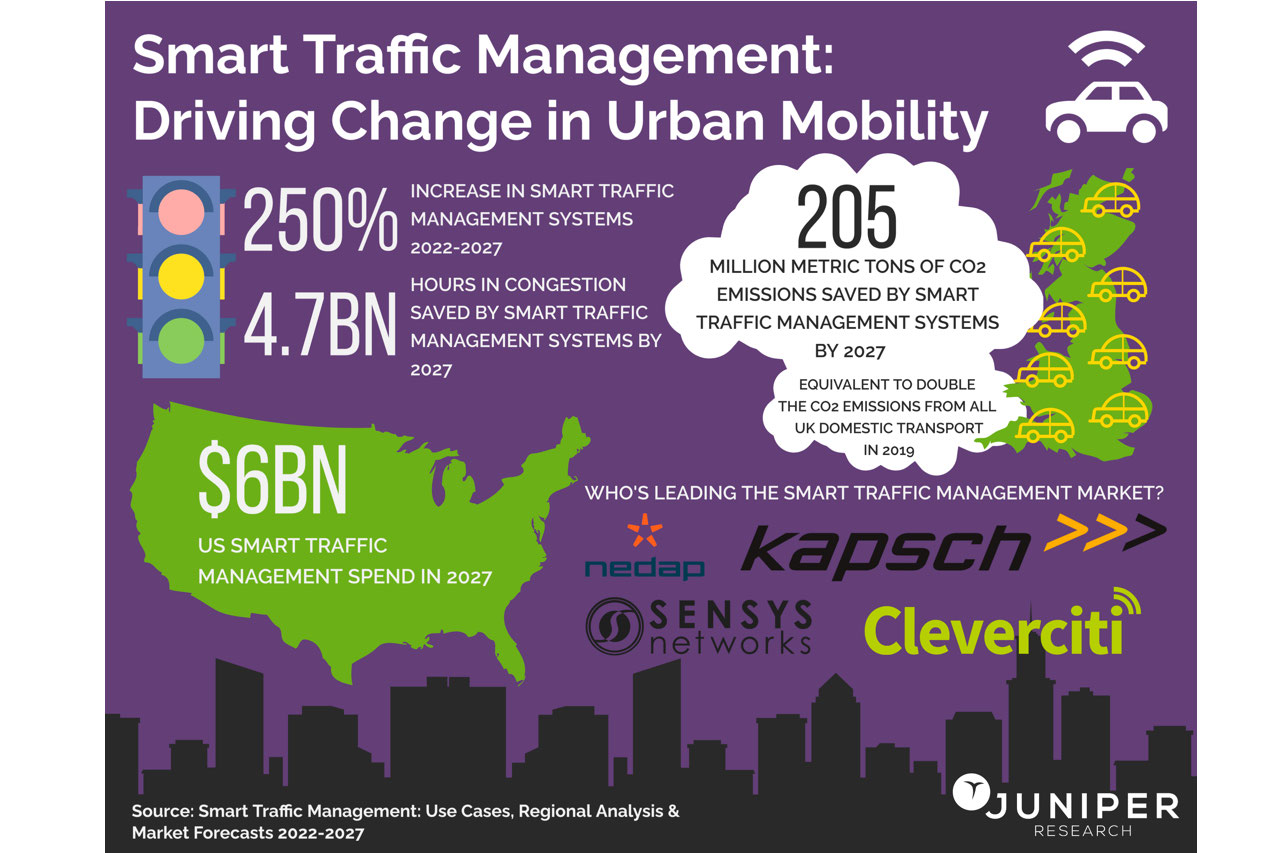
A new study from Juniper Research has predicted that global savings in CO2 emissions from smart traffic management systems will be 205 MMT (Million Metric Tons) by 2027; a growth of 41%, up from just 145.7 MMT in 2022. This significant saving will be equal to almost twice the CO2 emissions arising from UK domestic transport in 2019. Reducing congestion through optimised traffic control will be the main influencing factor. Smart traffic management uses digital technologies to manage traffic, based on real-time data to reduce congestion, and minimise emissions.
The new research, Smart Traffic Management: Use Cases, Regional Analysis & Marketing Forecasts 2022-2027, identified environmental benefits from smart traffic management systems as being highly compelling, including significant reductions in congestion, and prioritising greener transport modes. The report identified smart intersections as driving reductions, with hours of time spent in traffic set to decrease by 36 hours on average per annum per motorist globally by 2027.
For more insights, download the free whitepaper: Smart Traffic Management ~ The End of Urban Congestion


Smart Intersection Investment to Grow by 78%
The report forecasts that investment into smart intersections will reach $10.2 billion by 2027; rising from $5.7 billion in 2022. It anticipates that smart intersection vendors will focus on improving connectivity between road vehicles and the local road network ecosystem; mirroring government smart city initiatives. Vendors must leverage the low-latency capabilities of 5G, combined with machine learning algorithms, to enable network adjustments to be made in real-time and improve traffic flow.
Cybersecurity Fundamental for Public Trust
The research argues cybersecurity must be considered during the implementation of smart traffic systems to maximise public support; negating concerns about data collection and storage. Smart traffic management systems must be prioritised for cybersecurity implementation, as user data is transmitted at every stage of the process. Given the potential for cyberattacks to disrupt infrastructure through denial of service, robust cybersecurity strategies are essential to prevent threats on the integrity of the road infrastructure.